New and recently funded Space Startups
1

Country: USA | Funding: $582.1M
Xona Space Systems is a provider of geopositioning, navigation, and timing satellite services. It maintains advanced positioning, navigation, and timing infrastructure in Low Earth Orbit.
Xona Space Systems is a provider of geopositioning, navigation, and timing satellite services. It maintains advanced positioning, navigation, and timing infrastructure in Low Earth Orbit.
2

Country: Latvia
SpaceOro is a Latvian space startup focused on lunar transportation and infrastructure, including hosted payload missions, lunar cargo systems, and future Moon infrastructure. We specialise in space technology, aerospace innovation, and commercial space developments.
SpaceOro is a Latvian space startup focused on lunar transportation and infrastructure, including hosted payload missions, lunar cargo systems, and future Moon infrastructure. We specialise in space technology, aerospace innovation, and commercial space developments.
3

Country: USA | Funding: $29.5M
Kapta Space develops electrically steerable radar imaging equipment for space.
Kapta Space develops electrically steerable radar imaging equipment for space.
4

Country: USA
Voyager Technologies develops space infrastructure and technology solutions spanning low-Earth orbit to moon, including the Bishop Airlock, microgravity research and technology payload services, satellite launch and mission services. The company offers controllable solid propulsion, communications and signals intelligence systems, and guidance, navigation. Voyager Space leads commercial space destination programs such as the Starlab joint venture for continued human presence and research in low-Earth orbit.
Voyager Technologies develops space infrastructure and technology solutions spanning low-Earth orbit to moon, including the Bishop Airlock, microgravity research and technology payload services, satellite launch and mission services. The company offers controllable solid propulsion, communications and signals intelligence systems, and guidance, navigation. Voyager Space leads commercial space destination programs such as the Starlab joint venture for continued human presence and research in low-Earth orbit.
5

Country: USA | Funding: $2.2B
Sierra Space implements complex space projects, including satellite missions (using its own small, high-performance, and affordable satellites for in-orbit servicing) and space stations. The company also develops new technologies and systems for spacecraft, including solar-powered electrical systems, surface-mount technology to significantly reduce space power supply lead times, hypersonic engines and life support systems. Sierra's most famous product is the reusable Dream Chaser spacecraft, designed to deliver cargo and crew to and from the station. It is the only commercial spaceplane capable of takeoff and landing.
Sierra Space implements complex space projects, including satellite missions (using its own small, high-performance, and affordable satellites for in-orbit servicing) and space stations. The company also develops new technologies and systems for spacecraft, including solar-powered electrical systems, surface-mount technology to significantly reduce space power supply lead times, hypersonic engines and life support systems. Sierra's most famous product is the reusable Dream Chaser spacecraft, designed to deliver cargo and crew to and from the station. It is the only commercial spaceplane capable of takeoff and landing.
6

Country: South Korea | Funding: ₩58.5B
Unastella operates its own launch vehicles to provide human space travel platform services.
Unastella operates its own launch vehicles to provide human space travel platform services.
7
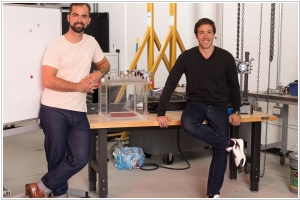
Country: USA | Funding: $722M
Apex develops small satellite platforms for commercial and government customers. Its productized bus platform improves reliability, reduces costs and accelerates manufacturing at constellation scale, while built-in customization allows you to easily adapt an existing platform to your mission's specific requirements. The company also provides comprehensive space mission management services, from spacecraft analysis to payload integration and on-orbit commissioning.
Apex develops small satellite platforms for commercial and government customers. Its productized bus platform improves reliability, reduces costs and accelerates manufacturing at constellation scale, while built-in customization allows you to easily adapt an existing platform to your mission's specific requirements. The company also provides comprehensive space mission management services, from spacecraft analysis to payload integration and on-orbit commissioning.
8

Country: Spain | Funding: €136.4M
Sateliot is a satellite operator offering global, continuous Internet of Things (IoT) connectivity via 5G protocol via its low-orbit satellite constellation. Sateliot's network is designed to connect small devices, such as monitoring equipment on refrigerated containers transported by sea, to satellites. Its clients include logistics companies, farmers, oil platforms, and environmental research organizations. The company's customers are primarily located in the countries with large areas unserved by mobile networks, including Canada, Brazil, South Africa, Indonesia, and Australia.
Sateliot is a satellite operator offering global, continuous Internet of Things (IoT) connectivity via 5G protocol via its low-orbit satellite constellation. Sateliot's network is designed to connect small devices, such as monitoring equipment on refrigerated containers transported by sea, to satellites. Its clients include logistics companies, farmers, oil platforms, and environmental research organizations. The company's customers are primarily located in the countries with large areas unserved by mobile networks, including Canada, Brazil, South Africa, Indonesia, and Australia.
9

Country: Japan | Funding: $447.7M
Astroscale provides a full range of on-orbit services, including refueling, in-situ space monitoring, and debris disposal and removal to build resilient space systems. The company also provides on-orbit asset diagnostics to support ADR, EOL, and LEX services to extend the life of spacecraft, maximize their usefulness, and reduce manufacturing and operating costs.
Astroscale provides a full range of on-orbit services, including refueling, in-situ space monitoring, and debris disposal and removal to build resilient space systems. The company also provides on-orbit asset diagnostics to support ADR, EOL, and LEX services to extend the life of spacecraft, maximize their usefulness, and reduce manufacturing and operating costs.
10

Country: USA | Funding: $53.7M
Lunar Outpost is building moon rovers for NASA's Artemis program. The company's first, larger rover, Eagle, is designed to transport astronauts, while the second, Pegasus, is closer to the more compact MAPP-class models: autonomous, modular, and designed for tasks requiring no human intervention. The core idea behind the Lunar Outpost project is that the same wide range of autonomy, mobility, and regolith processing systems that can transport scientific payloads can later assist in preparing landing sites, hosting equipment, maintaining power systems, and servicing equipment between manned visits.
Lunar Outpost is building moon rovers for NASA's Artemis program. The company's first, larger rover, Eagle, is designed to transport astronauts, while the second, Pegasus, is closer to the more compact MAPP-class models: autonomous, modular, and designed for tasks requiring no human intervention. The core idea behind the Lunar Outpost project is that the same wide range of autonomy, mobility, and regolith processing systems that can transport scientific payloads can later assist in preparing landing sites, hosting equipment, maintaining power systems, and servicing equipment between manned visits.